

I left the Seoul Museum of Art with three big takeaways. Two came from Jae-Eun Choi’s exhibition, “Where Beings Be,” and the third, from several other artists, I am going to ponder for a bit. I experience it often, and I want to think about how to approach the idea sensitively. It is when you read the artist’s or curator’s statement, then look at the art, and it makes absolutely no sense. For now, let me start with Jae-Eun Choi’s exhibition. I continue to think about it, which is a very good sign.
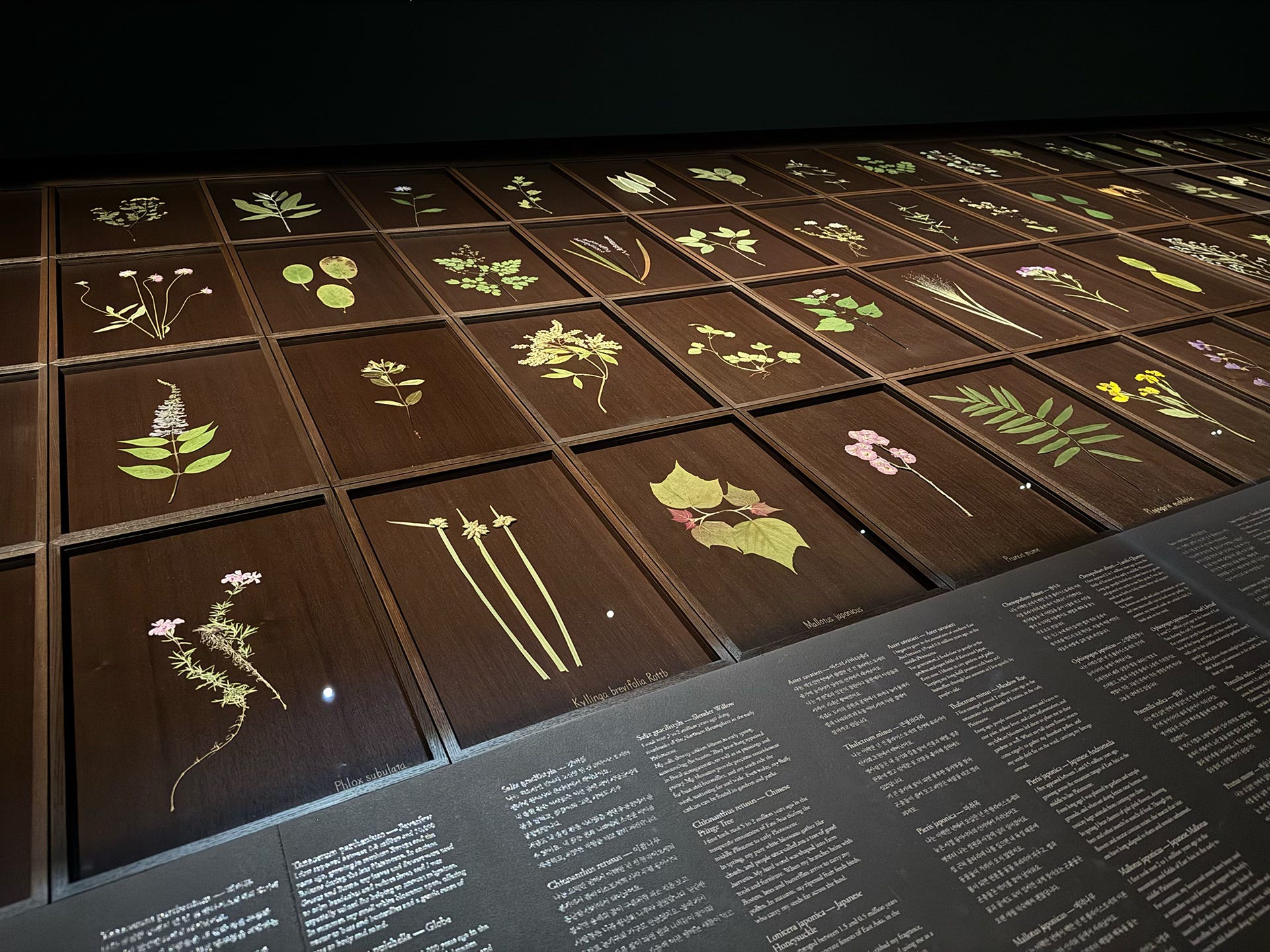
My first takeaway came when I was standing in Names of the Unseen, the third gallery of her show, inside which was When We First Met. As I turned a corner to enter the room, the tone was set. In an otherwise dark room, lights were directed to two rows of angled display cases, pulling me to them.
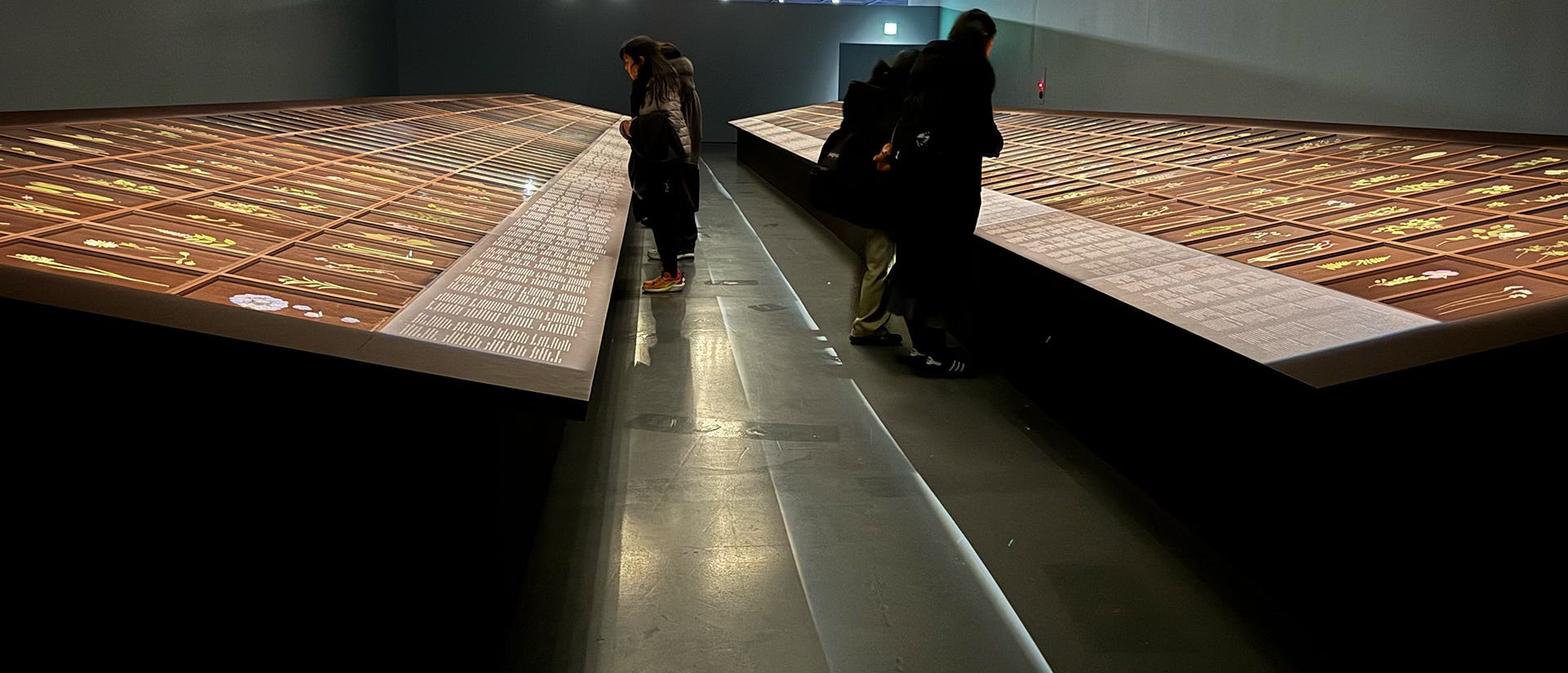
Choi had collected over 560 wildflowers and plants from her daily life, and the magic was both in how she presented them, and the message. Years ago I spent hours in the Univeristy of Wisconsin herbarium, looking at mostly brown, sometimes broken, flattened prints from around the world. Choi’s plants, though flat and long dead, were beautiful. Their arrangements were elegant and dignified. They retained their color. And they were each arranged on a small urushi-lacquered wood panel. Urushi is used to to coat the lacquer bowls I so admire in Japan.
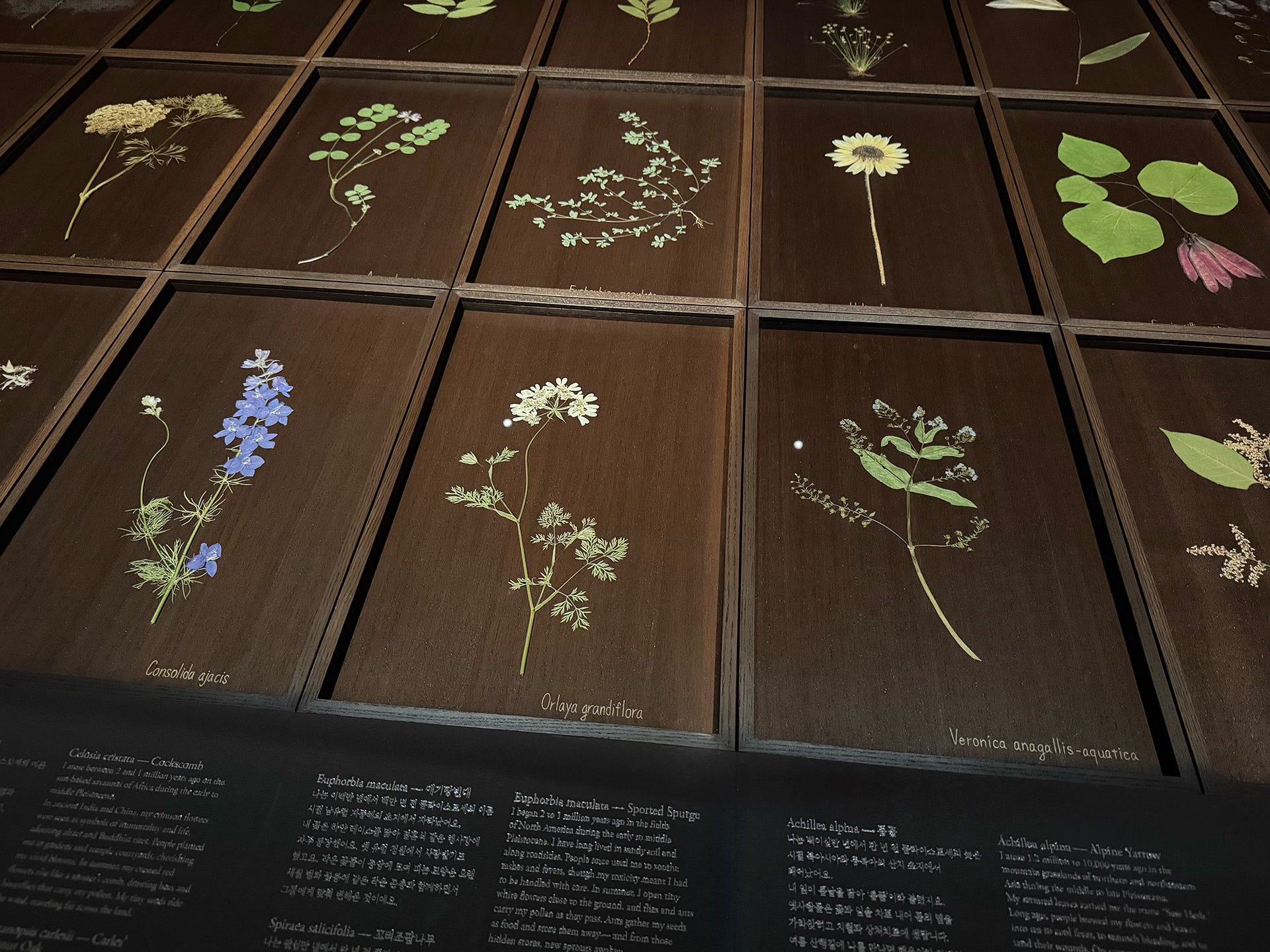
The concept behind the entire show was based upon the idea that all life is connected, and this particular presentation affirmed that even the smallest, most unassuming beings possess inherent worth.* Below the plants were short perspectives, in Korean and English, written from the voice of the plants. The show catalogue elaborated that the short words were narratives of origin, coexistence with humanity, and imminent crises. As an example, below Equisetum hyemale, known as Rough Horsetail, was, I have lived for 270 to 230 million years along rivers and wetlands in Eurasia and North America, since the later Permian of the Paleozoic. Because I have changed so little, people often call me a living fossil, a quiet remnant of the world before flowering plants. My coarse stems were once used to smooth wood and metal, and healers gathered me as a remedy to cool fever and tend wounds. Even now, I grow along riverbanks, helping to clear the water as it flows past and offering shelter to small insects that slip between my narrow stems.
People came into the gallery and lowered their voices. They took their time to look and read. I am guessing that everyone left gently changed.
So my first takeaway was actually twofold. First, the atmosphere you create matters if you want people to engage. And second, create the perfect support for your idea. Put another way, details matter, and keep them on point. Everything about the exhibit, from the lighting to the flowers, from the lacquered wood to the first-person narratives, was compelling. Music director Jang Young-gyu created To Call by Name, with endangered plant names being quietly sung in the background. All these little touches supported the bigger idea, they did not get in the way or distract, nothing was forced on the idea.
In the fourth room, in addition to art on the walls, the floor, and in display cases, there were about a dozen flat, rust-colored metal sheets laid out like stepping stones in a Japanese Garden.
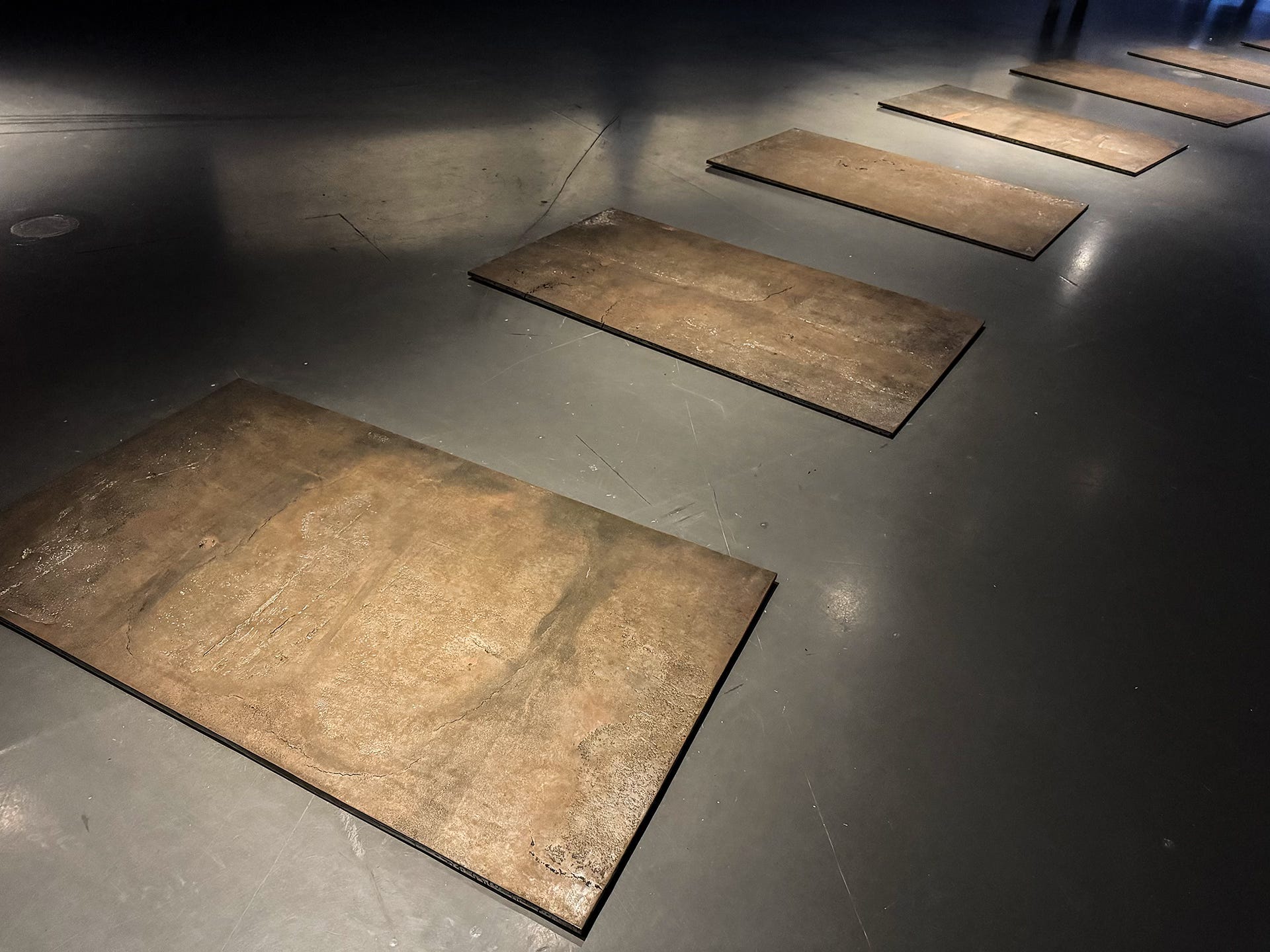
They had interesting patterns—marks, textures, brown color variations—etched into them, but I had no idea what they meant until I pulled aside and read the show booklet. This sculptured work, Hatred Melts Like Snow, was created when Choi melted and recasted barbed wire from the Demilitarized Zone between South and North Korea, transforming symbols of division into paths toward a borderless, life-centered future.*
I looked around, and just one person had a program booklet in their hands.
So the other big takeaway was that interpretation matters. Sometimes it is true that a photograph or piece of art should speak for itself, but this was a good example of how knowing more elevated the art to thinking more deeply about the division between countries, reflecting on our human-made closed borders and the open nature of the natural world. Without a little help from the written word, I might have wandered through thinking that these pieces were interesting abstracts at most.
I will give you another example. From the same show, the second gallery is titled Microcosmos. The title cards next to the two-dimensional pieces on the walls said, “washi and acrylic resin”, and they were in the range of 40 inches in both dimensions. They were richly patterned abstracts, dark, and compelling to get close to and peer into.
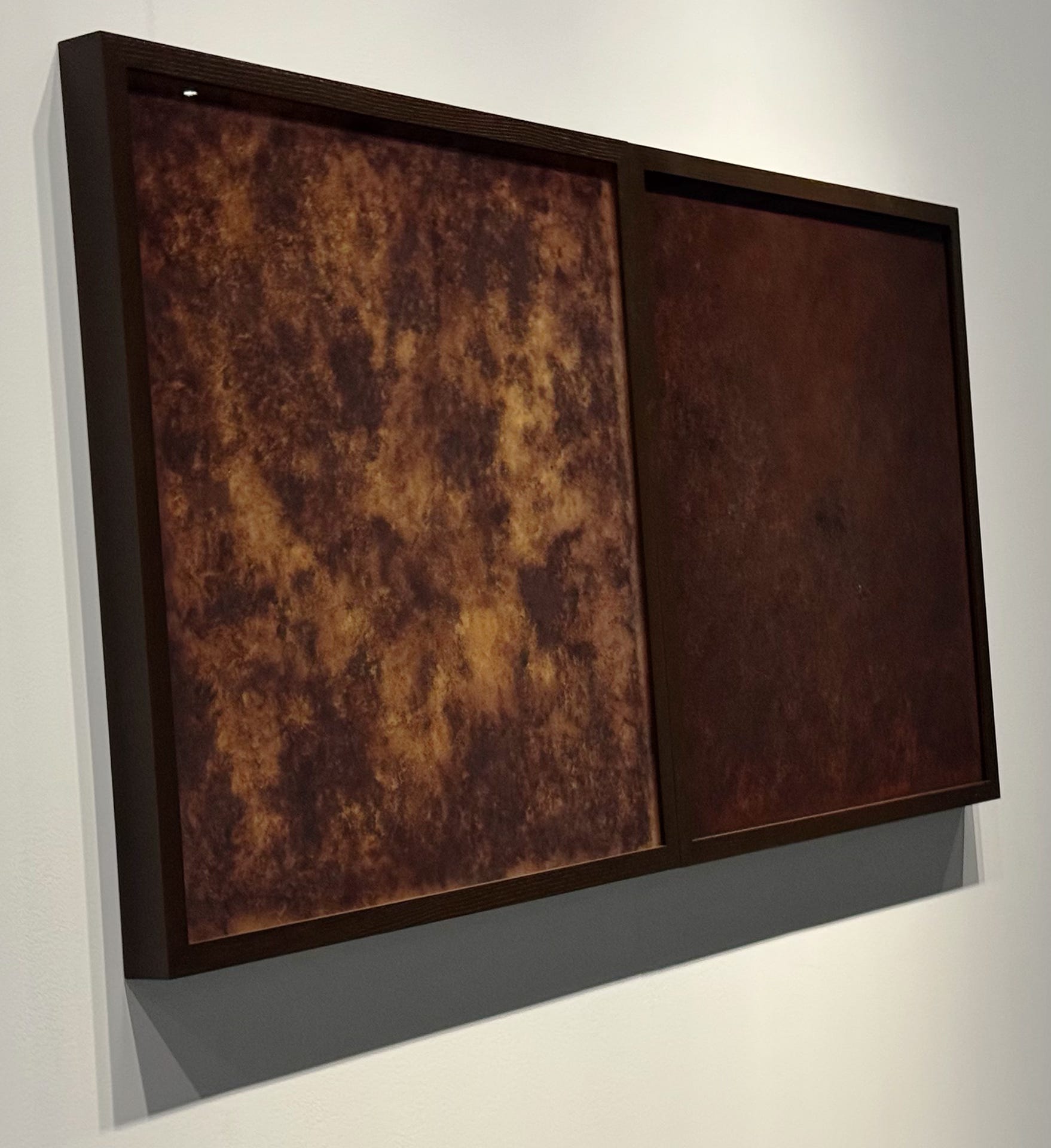
Again, there wasn’t more information. As I was about to leave the gallery, I pulled out the program guide, read that the prints were part of her World Underground Project, meant to look at the microscopic worlds beneath the earth, Choi buried washi paper made of mulberry, kozo, and hemp in soils across at least four contingents and waited for nature’s imprint to appear. This exhibition in Seoul had prints from papers buried in the forests of Karuizawa, Japan.
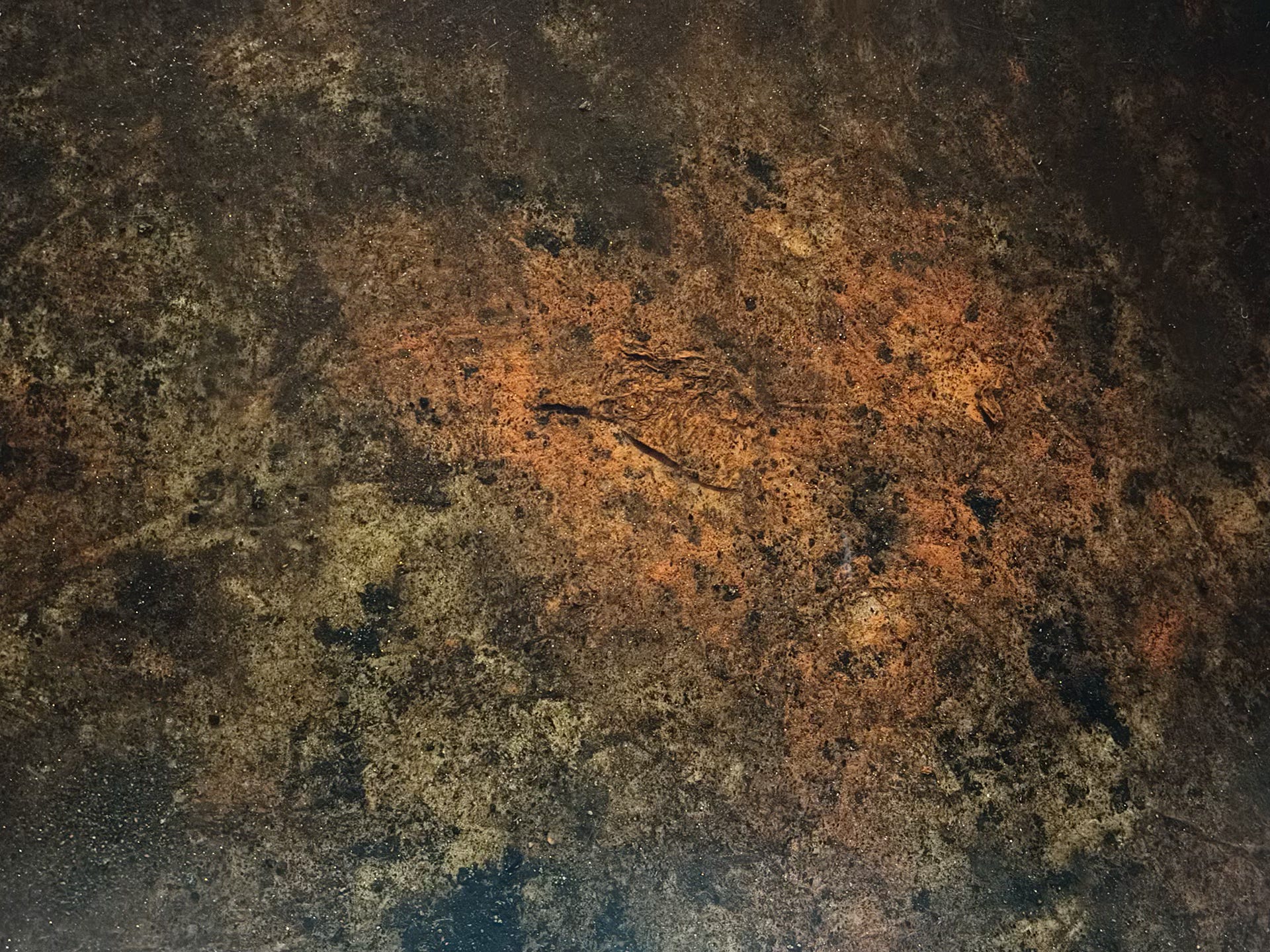
Without the written explanation I would have appreciated the prints, but would not have understood that the marks were made by soil and microorganisms within the earth’s cyclical rhythms. That was cool, so I went back in the room and took another, deeper look at every print, imagining the influences of time below the surface.
It was a rich visit. The creative intention in Jae-Eun Choi’s art, and the thoughtfulness of the museum’s curation, led me to pull out my notebook and write Present art in thoughtful ways, surround it with support that enhances, not detracts, and find a way for people to understand what might be missed.
And now, off I go to ponder how to approach the other idea: when statements are ridiculous, or so far off the mark.
*From the show catalog, Where Beings Be, Jae-Eun Choi, Seoul Museum of Art. 2025
Excellent and you made me think a lot!!!!!
Excellent commentary on experiencing museum or gallery exhibitions and wise takeaways about presentation and curation.
Thank you